
Modern Floodplain Management: Reducing Legal, Financial, and Operational Risk
Floodplain management is often treated as a technical or regulatory function. In reality, it is one of the most consequential enterprise risk levers that an organization can manage—shaping decision defensibility, funding outcomes, and operational accountability.

Where and how communities allow development, how flood risk is communicated, and how impacts are documented during and after an event can shape everything from legal exposure and financial outcomes to emergency response effectiveness and public trust. Yet in many organizations, floodplain decisions stall or fracture because different leaders are solving for different risks using different data, assumptions, and timelines.
Legal teams prioritize defensibility and liability
CFOs focus on financial exposure and funding eligibility
Floodplain managers need accuracy and compliance
Emergency management directors need clarity during fast-moving events
When these perspectives aren’t aligned, floodplain management becomes reactive, fragmented, and high-risk, especially under post-event scrutiny.
The good news: alignment is possible.
Floodplain Management Challenges
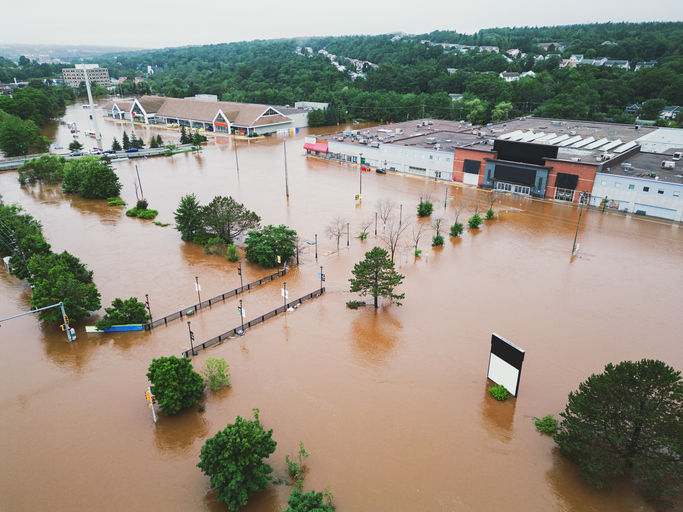
Flood events don’t just test infrastructure; they test governance.
After major flooding, organizations are often forced to answer difficult questions:
Why did water reach areas outside mapped floodplains?
Were decisions made using the best available information at the time?
Can we justify response actions, closures, or declarations?
Do we have evidence to support recovery funding or mitigation investments?
Too often, the answers depend on static flood maps, disconnected datasets, or post-event reconstructions. That leaves room for disagreement across departments and increases organizational risk.
The challenge isn’t a lack of data; it’s the lack of a shared defensible view of flood impact that works for everyone involved before, during, and after an event.
What Each Leader Needs, and Why It’s Hard to Satisfy Everyone
Modern floodplain management must meet multiple, sometimes competing, priorities across the organization.
Legal teams need decisions to be:
Evidence-based
Documented and repeatable
Defensible under post-event scrutiny
They are often concerned less with forecasts and more with whether decisions can be justified months or years later in audits, litigation, or public reviews.
Finance leaders need clarity on:
Potential and realized damages
Exposure across jurisdictions or regional assets
Whether investments reduce long-term costs
How flood intelligence supports funding, grants, and mitigation projects
Uncertainty creates budgeting risk and can delay or jeopardize funding decisions.
Floodplain managers require:
Accurate, up-to-date flood intel
Insight beyond static flood zones
Tools that reflect real flood behavior, not just historical boundaries
They often see gaps in traditional floodplain maps but struggle to translate that insight into executive-level decisions without defensible, event-specific evidence.
Emergency managers need:
Actionable flood intel before/during a live crisis
Clear documentation after events
Faster paths to recovery and funding
A shared operating picture across departments
They operate at the intersection of urgency and accountability. These needs aren’t in conflict with one another; they just require a better foundation of impact-based, decision-ready data.
From Static Flood Zones to Impact-Based Floodplain Management
Traditional floodplain management relies heavily on static maps, such as regulatory floodplains that represent long-term probability rather than event-specific reality.
But real floods are dynamic, and decision-makers need to understand real-world impacts as they unfold. This is where Impact Analytics changes the conversation.
Rather than focusing only on where water might go, Impact Analytics shows what is likely to be impacted, when, and how severely—at the level of detail leaders need to see to support defensible decisions.
How Impact Analytics Aligns Leadership Around a Shared Source of Truth
FloodMapp’s Impact Analytics combines flood extent and depth data with operational datasets to deliver clear, defensible insights that every department can rely on through a single, shared operating picture.
With Impact Analytics, organizations can understand:
Which structures are impacted, and to what extent
How flooding is affecting residential, commercial, and public assets
Where roads and critical infrastructure are compromised
How impacts vary across neighborhoods and jurisdictions
Estimated damages to support recovery and mitigation decisions
This shared evidence base reduces internal friction and allows leadership teams to make faster, more confident decisions before, during, and after flood events while maintaining a clear audit trail.
Floodplain Management Everyone Can Stand Behind
Flood risk doesn’t sit neatly within one department, and floodplain management shouldn’t either. By providing defensible, impact-based flood intelligence, FloodMapp helps organizations:
Align leadership priorities
Reduce legal and financial exposure
Improve flood response and recovery outcomes
Build trust through clear public communication
When everyone is working from the same evidence, flood decisions become easier to defend, explain, and agree on.
If your organization is looking to modernize floodplain management and reduce enterprise risk, FloodMapp’s Impact Analytics can help.
Request a demo to explore how impact-based flood intelligence can support defensible decisions across planning, response, and recovery.


mình có lần lướt đọc mấy trao đổi trên mạng شيخ روحاني thì thấy nhắc nên cũng tò mò mở ra xem thử cho biết. mình không tìm hiểu sâu chỉ xem qua trong thời gian ngắn để quan sát bố cục cách sắp xếp جلب الحبيب các mục và trình bày nội جلب الحبيب dung tổng thể. cảm giác là các phần được trình bày khá gọn, các hurentest berlin mục rõ ràng Huren Berlin nên đọc lướt cũng không bị rối với mình như vậy là đủ để nắm tin cơ bản rồi. جلب الحبيب
👍
Understanding router settings can be helpful when users need to maintain or troubleshoot their wireless connection. Clear instructions can explain the access process and make configuration options easier to recognize. Anyone researching 10.0.0.1 can benefit from simple information that supports everyday network management.
Users searching for 10.0.0.1 Piso WiFi Pause may want to protect unused session time when they temporarily stop using the connection. Before relying on the option, it is useful to check whether the particular machine actually provides pause and resume controls.
A structured daily schedule can provide stability during residential recovery. Consistent wake-up times, meals, therapy sessions, wellness activities, rest periods, and community interactions can create predictable routines. Predictability may be helpful for people whose previous lifestyles became disrupted by substance use. Daily structure also creates opportunities to practice time management, responsibility, communication, and https://ojairecovery.com/ self-care. Over time, these routines can become practical tools that clients carry into continuing care and everyday life after completing residential treatment.
Really insightful piece on the connection between wildfires and floods. I think Faceless Reels could be a great tool for quickly sharing these important findings with a wider audience.